While everyone knows about Capt (Dr) Lakshmi Swaminathan (Sahgal) of Netaji’s Rani of Jhansi Regiment, I don’t think enough work has been done to identify the other members of the Rani Jhansi Regiment.
Ranis mentioned in The War Diary of Asha-San
- Lt Asha Sahay (Bharati ‘Asha’ Sahay Choudhry) – also known as Asako in Japan – 朝子)
- Lt Pratima Dasgupta (Pratima Pal or Pratima Paul)
- Lt Janaki Bai (Janaki Fateh Singh Bai) – Asha’s platoon commander. From Sabak Bernam, Malaya.
- Anjuli Bhowmick – Sister of Shanti Bhowmick and daughter of Dhiren Chandra Bhowmick. One of the youngest Ranis to enlist at the age of 12.
- Shanti Bhowmick – Anjuli’s elder sister, joined the RJR at the age of 14.
- Ponnammah Esther Navarednam – Originally from Ceylon, the Navarednam sisters heard a speech by Netaji Subhas Chandra Bose in Ipoh, Malaya, and joined soon after.
- Rasammah Naomi Navarednam – Sister of Ponnammah, wrote a memoir titled Footprints on the Sands of Time, Rasammah Bhupalan: A Life of Purpose
- Emily Xavier – A Rani from Burma. See biography at the end of this page.
Other Ranis of the Rani Jhansi Regiment
This is a preliminary list. I will be adding more details as and when I find them.
- Lakshmi Swaminathan (Lakshmi Sahgal) – Short bio given here. Author of A Revolutionary Life: Memoirs of a Political Activist
- Bela Mukherji (Bela Datta) – Short bio given here.
- Lt. Manavati Pande (Arya) – Author of the book Patriot The Unique Indian Leader. I have ordered this, so I will update you on this soon. – Short bio given here.
- Gouri Bhattacharya – Short bio given here.
- Gian Kaur – Short bio given here.
- Janaki Davar (Thevar) (Janaky Athi Nahappan)
- Karuna Mukherjee
- Lt. Mamata Mehta
- 2nd Lt. Rama Mehta – Author of Jai Hind: The Story of Lt. Rama Khandwala of Netaji Subhas Bose Azad Hind Fauj
- Major Leelavati Mehta
- Ranu Bhattacharya
- Chandramukhi Devi (Mataji),
- Lt. M Satyavati Thevar
- Anjalai Ponnusami
- Meenachi Perumal
- Maya Ganguli
- Shipra Sen
- Namita Sengupta
- Reba Sen
- Chitra Mukherjee
- Saraswati Garewal
- Urmila Ayangar
- Rukmini Khandelkar
- Havildars Josephine and Stella (who were killed in action in 1945)
Books on the Rani of Jhansi Regiment
While there hasn’t been too much research done on the Rani of Jhansi Regiment, here are some recommended books.
First-hand accounts by Ranis of the Regiment
- The War Diary of Asha-san: From Tokyo to Netaji’s Indian National Army by Lt Bharati ‘Asha’ Sahay Choudhry
- Jai Hind: The Story of Lt. Rama Khandwala of Netaji Subhas Bose Azad Hind Fauj by Lt Rama Mehta / Rama Khandwala
- A Revolutionary Life: Memoirs of a political activist by Capt Lakshmi Sahgal
- Patriot: Netaji, Subhash Chandra Bose by Lt Manawati Arya (Pandey)
- Footprints on the Sands of Time Rasammah Bhupalan: A Life of Purpose by Aruna Gopinath
Other books by historians and researchers
- Women Against the Raj: The Rani of Jhansi Regiment by Joyce C. Lebra
- In Search of Freedom: Journeys Through india and South-East Asia by Sagari Chhabra
- Women at War: Subhas Chandra Bose and the Rani of Jhansi Regiment by Vera Hildebrand
About Rani Emily Xavier (from Burma, Joined RJR in 1944)
I had found a reference to Emily Xavier online a few years ago, and fortunately, had noted it down. The post was published on a website called worldwar2burmadiaries.com by Joseph A. Valu. The website sadly is no longer functional.
Emily is mentioned in The War Diary of Asha-san a few times. Notably, she takes care of Asha when she is suffering from malarial fever, and is one of the Asha’s closest companions. This is how Asha describes her in the diary: “Of all my friends, she alone is selfless, calm and understanding. She even wakes up at night to check on me. I never feel I am far from home with her nearby.”
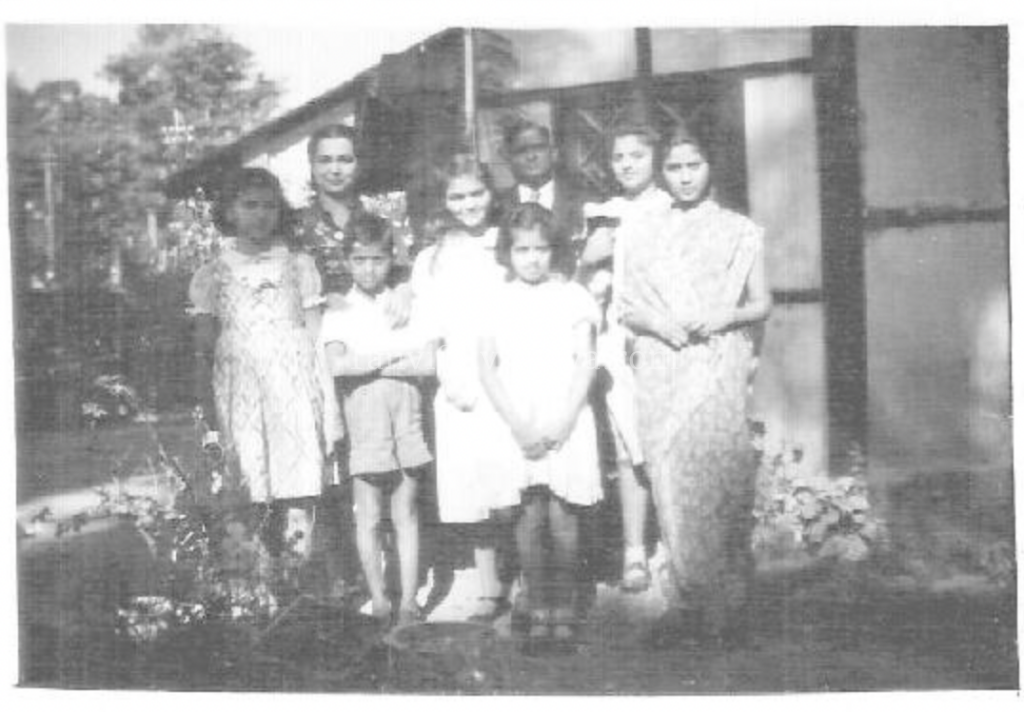
Joseph A. Valu: Emily Xavier, a favorite cousin of mine, had lived with our family for many years after the sudden death of her father, a barrister, in London.
She surprised us—and angered Father, who was a Captain in the British Army of Burma hiding in plain sight—when she suddenly left us in Maymyo to join the Rani of Jhansi Regiment, a women’s auxiliary of Subhas Chandra Bose’s Indian National Army, in 1944.
That her anti-British sentiment was occasioned by their terrible let down of Indian refugees attempting to escape to India at the Myitkyina airstrip, together with the personal affront and trauma she suffered at the hands of an unnerved British Army officer on the road to Myitkyina on May 6, 1942, may give insight to her decision.
That her move was possibly Providential in nature was very well told in my sister Sheila’s book At Long Last Liberation, (Authorized Edition) Copyright Sheila M. Valu and Joseph A. Valu (ed.) 2006. Unpublished.
Members of the Rani Jhansi Regiment Returns to India?
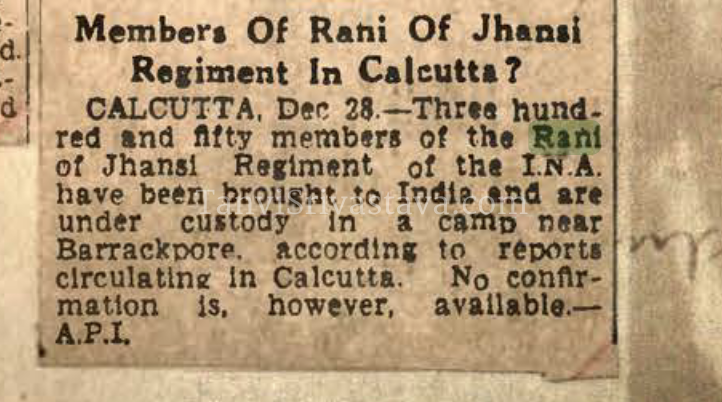
I found a newspaper clipping in the National Archives from the Hindustan Times, dated 29 December 1945, stated that 350 members of the RJR had been brought to India and were being held in custody in a camp near Barrackpore.
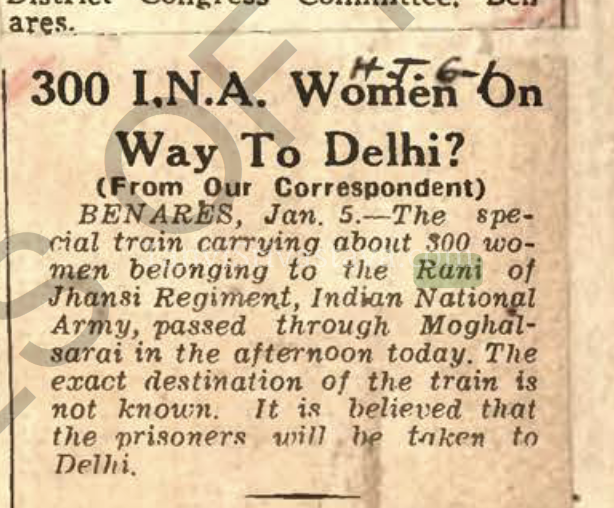
A week later, on January 6, 1946, HT published an article declaring that the special train carrying the RJR women had passed through Moghalsarai (Benaras) on its way to Delhi.
Leave a Reply